- Certificate programs, like the Certified Supply Chain Professional (CSCP)
- Skill-based training modules, such as Robotics in Manufacturing Fundamentals (RMF)
- Undergraduate programs, like a Bachelor of Science in Supply Chain and Logistics Management
- Advanced degree pathways, such as a Master of Science in Global Supply Chain Management
- Unlocks development opportunities and career advancement potential within organizations
- Strengthens time and management skills and leadership confidence
- Helps employees adapt to automation, sustainability, and global supply chain transformation
Ways to Grow Your Manufacturing & Supply Chain Skills Through Professional Development


The manufacturing and supply chain industries are evolving fast. As automation, analytics, and global logistics reshape production, workers need new skills to stay competitive. Continue your education to develop your leadership skills, pursue your bachelor’s degree, or to strengthen your readiness for new manufacturing technologies and evolving expectations in the workforce.
What are the best program options through Workforce Edge for manufacturing and supply chain professionals?
What are five ways to develop skills that employers look for within the manufacturing and supply chain fields?
1. Specialization and Advanced Certification
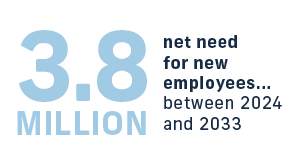
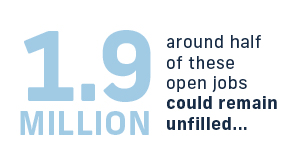
In 2023, Deloitte and the Manufacturing Institute found that “the net need for new employees in manufacturing could be around 3.8 million between 2024 and 2033. And, around half of these open jobs (1.9 million) could remain unfilled if manufacturers are not able to address the skills gap and the applicant gap.” By earning specialized credentials, you can help close this skills gap and position yourself as a high-value, future-ready professional.
Programs like the Certified Supply Chain Professional (CSCP), Certified in Planning and Inventory Management (CPIM), or Certified Manufacturing Engineer teach advanced problem-solving and process optimization skills.
2. Leadership and Administrative Training
Build your leadership and administrative experience to prepare for a career pivot. Programs such as the Professional Master’s in Manufacturing Leadership (Online) or the Master of Science in Project Management build decision-making ability and time and management skills, helpful for team leads, supervisors, and plant managers.
3. Technology and Automation Skills
Automation and data analytics continue to transform manufacturing. Upskilling and reskilling in digital production, robotics, and predictive maintenance can help you stay relevant as processes modernize. Learning applicable tech skills, such as integrating AI-driven systems or managing Internet of Things (IoT) devices, can prepare you for the next generation of manufacturing jobs.
4. Soft Skills and Communication
Technical ability is only one part of the equation. Strong communication and problem-solving skills support collaboration, quality control, and safety. Developing leadership skills such as conflict resolution and active listening can make you a better people manager.
5. Workforce Development and Skills Assessment
Every organization relies on skilled workers who can adapt to new challenges. Help identify your strengths and areas for growth by participating in workforce development programs or completing a skills assessment.
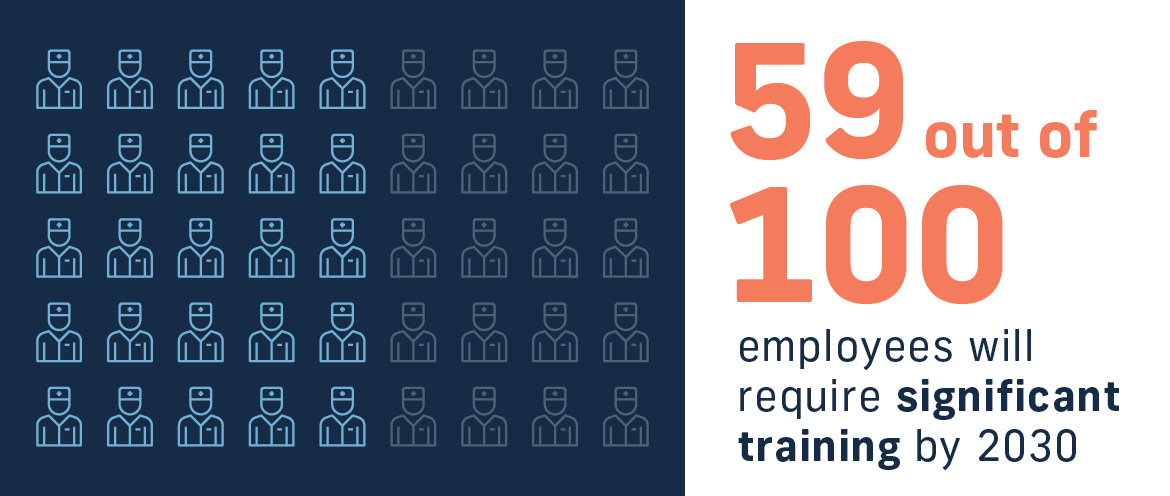
According to the 2025 Future of Jobs report from the World Economic Forum, 59 out of 100 employees will require significant training by 2030. By proactively upskilling and reskilling, you can align your abilities with employer demand and prepare for long-term career development.
How can continuing education help prepare you for the future of manufacturing?
According to the World Economic Forum Future of Jobs Report 2025, “on average, workers can expect that two-fifths (39%) of their existing skill sets will be transformed or become outdated over the 2025–2030 period.”
By pursuing continuous professional development, you can stay ready for what’s next.
What other questions are people asking?
Q: How can I choose the right continuing education courses for my role?
A: Explore professional development courses online through Workforce Edge that can improve your technical abilities, teach you leadership skills, and align with your overall career goals.
Q: What are examples of in-demand certifications?
A: Some of the most in-demand programs include the Certified Manufacturing Associate, Certified Supply Chain Professional (CSCP), Certified in Planning and Inventory Management (CPIM), and Robotics in Manufacturing Fundamentals (RMF). These programs are available through Workforce Edge partner institutions and align with the industry’s focus on upskilling and reskilling to meet workforce needs.*
Q: How does professional development improve career outcomes?
A: Continuous learning supports both employee development and organizational efficiency. As you gain new skills, you can enhance your value to employers while contributing to broader workforce development goals.
Pursue career goals with confidence
When you invest in continuing professional development, you can stay competent and competitive. Whether you go back to school with job benefits or even pursue self-paced online college, you’re building the confidence you need for career mobility. Find your employer and explore learning opportunities through Workforce Edge.
*Please review your employer’s education benefit policy, as not all learning providers mentioned above may be eligible under your current policy.
The manufacturing and supply chain industries are evolving fast. As automation, analytics, and global logistics reshape production, workers need new skills to stay competitive.


