- Certificate programs, like pursuing your Certified Medical Administrative Assistant (CMAA) certificate
- Skill-based training modules, like a Micro-Credential in Public Health and Health Leadership
- Undergraduate programs, like an Online Bachelor of Science in Nursing (BSN)
- Advanced degree pathways, like a Master of Science in Nursing Informatics
- Certified Clinical Medical Assistant (CCMA) – Builds essential patient care and administrative skills used across hospitals and clinics.
- Certified Electronic Health Records Specialist (CEHRS) – Prepares professionals to manage digital patient records and support healthcare data compliance.
- Medical Billing and Coding Certification – Supports the growing need for accuracy in health information management and telehealth documentation.
- Certified Phlebotomy Technician – A fast-track, high-demand pathway for professionals entering clinical support roles.
- Graduate Certificate in Health Informatics – Equips healthcare professionals to analyze, manage, and protect digital health data as technology reshapes patient care.
6 Growth Opportunities for Continuing Professional Development in Healthcare
At all career levels and stages of career development, healthcare professionals face constant change. Keeping up with evolving technology, staying current with compliance, and building your skills to understand the latest in patient care standards can feel overwhelming. From nursing degrees to healthcare certifications to more general professional development courses online, the Workforce Edge platform has plenty of options for upskilling in the healthcare industry.
6 Ways to Expand Your Healthcare Career Goals Through Continuing Education
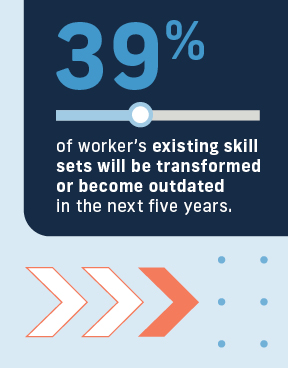
According to the World Economic Forum Future of Jobs Report 2025, “on average, workers can expect that two-fifths (39%) of their existing skill sets will be transformed or become outdated over the 2025–2030 period.” Keeping an eye out for new specialties and relevant coursework or using upskilling as an education tool can help healthcare professionals stay ahead of technological advancements.
1. Specialization and Advanced Certification
Earn certifications in niche areas like radiology, infection control, or healthcare informatics. These credentials can support credibility and help to open doors to higher-level positions. If you already have an advanced degree or are pursuing one, you could consider obtaining a graduate certificate, like a Graduate Certificate in Health Informatics.
2. Leadership and Administrative Training
Build your administrative experience and prepare for a career pivot with programs in healthcare management, policy, or human resources. For example, pursuing your Master of Healthcare Administration (MHA) would allow you to develop essential leadership, operations, and policy management skills for professionals moving into supervisory or executive healthcare roles.
3. Nursing Education and Leadership Pathways
Whether you’re an RN ready to earn your BSN or an experienced nurse preparing for leadership, exploring your education through online nursing career pathways can help you pursue your career goals and drive patient outcomes. Many professionals pursue programs like an RN-to-BSN, or earn a Master of Science in Nursing (MSN) to qualify for roles in nurse leadership, education, or specialized practice areas.
4. Technology and Digital Health Education
As telehealth and digital records expand, upskilling and reskilling in data management and cybersecurity helps ensure compliance and efficiency in patient care. A Master of Science in Health Informatics and Analytics, for example, teaches professionals how to manage electronic health records (EHRs), promote cybersecurity compliance, and analyze digital health data.
5. Soft Skills and Patient Communication
When in doubt, fine tune your communication skills with a course or certification. You can become a better teammate, grow your empathy, and support patient outcomes. Consider a Micro-Credential in Public Health and Health Leadership.
6. Behavioral and Mental Health Training
Demand for behavioral health professionals continues to grow. Continuing education in areas like counseling, psychology, or substance abuse treatment can prepare you to support the mental health and emotional well-being of patients. Programs such as a Graduate Certificate in Mental Health Counseling or Applied Behavior Analysis can open the door to new career paths.
What are the best programs available through Workforce Edge for healthcare professionals?
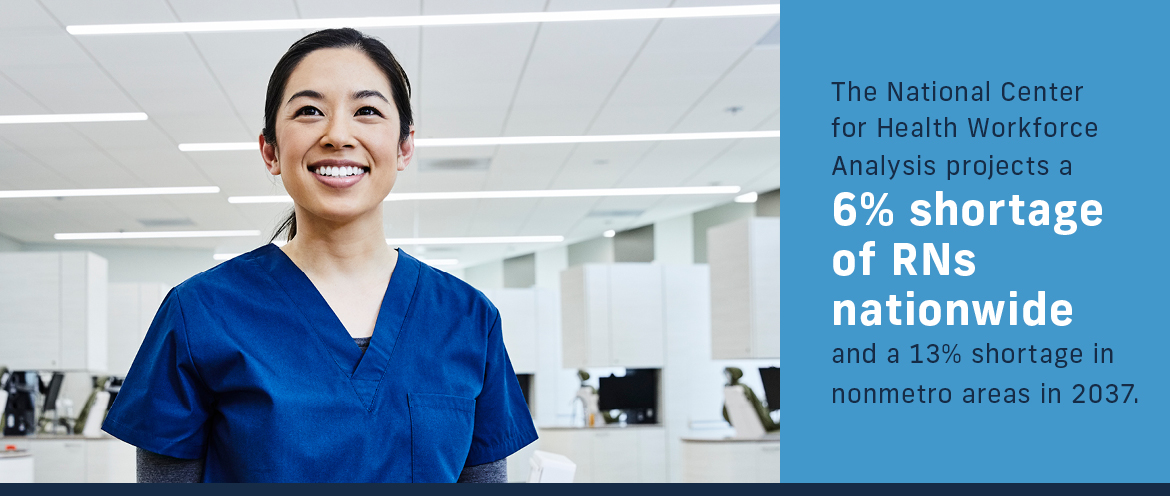
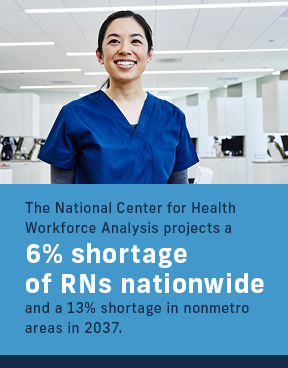
The National Center for Health Workforce Analysis projects a 6% shortage of RNs nationwide and a 13% shortage in nonmetro areas in 2037. Although that kind of demand can present opportunities for RNs, Workforce Edge provides continuing education for healthcare professionals across a variety of roles in addition to nursing, such as allied health, behavioral health, and highly specialized fields.
These professional development opportunities can help you stay compliant with evolving standards, keep on top of current healthcare trends, and contribute to overall skills for career growth and advancement.

What other questions are people asking?
Q: How can I choose the right continuing education courses for my role?
A: Focus on programs aligned with your current or desired specialty. Look for professional development courses online that offer CE credits recognized by your licensing board.
Q: What are examples of in-demand healthcare certifications?
A: Some of the most in-demand healthcare certifications today include:
These programs are available through Workforce Edge education provider partner institutions and align with the healthcare industry’s focus on upskilling, digital health, and patient-centered care.
Q: How does professional development improve patient outcomes?
A: Developing your skills and learning new ones can help you apply evidence-based practices, communicate effectively with patients, and use emerging technologies safely.
Pursue your career goals with confidence
When you invest in continuing professional development within the field of healthcare, you can stay compliant, competent, and competitive. When you go back to school with job benefits through Workforce Edge, you’re building the skills and confidence you need for long-term career mobility.
Your professional development can help to support better care for every patient you meet. Find your employer and explore learning opportunities through Workforce Edge.
*Please review your employer’s education benefit policy, as not all learning providers mentioned above may be eligible under your current policy.
At all career levels and stages of career development, healthcare professionals face constant change. Keeping up with evolving technology, staying current with compliance, and building your skills to understand the latest in patient care standards can feel overwhelming.


