- Unlock development opportunities
- Build leadership and administrative experience for management
- Stay competitive as roles evolve across cybersecurity and IT
- Certificate programs, like Cybersecurity Fundamentals, AI Strategy, or Cloud Security Training
- Skill-based training modules, like CompTIA Security+ or Network Defense
- Undergraduate programs, like a Bachelor of Science in Information Technology Management
- Advanced degree pathways, like a Master of Science in Cybersecurity
How to Support Your Career Goals in IT and Cybersecurity


Technology changes fast. One of the best ways to make your career in IT and cybersecurity future-ready is to keep learning new skills. Continuing professional development can help you address cyber threats, earn certifications, and stay on top of the rapid changes and trends from the latest AI technology.
5 Key Reasons to Grow Your IT & Cybersecurity Skills with Professional Development Courses Online
1. Be Future-Ready by Upskilling and Reskilling for Evolving Cybersecurity Roles
Can learning new skills support your IT career goals? AI and automation are reshaping IT, cybersecurity, and other jobs in tech. Upskilling and reskilling can help you:
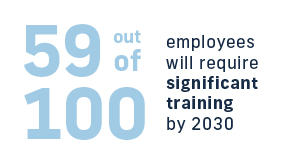
According to the 2025 Future of Jobs report from the World Economic Forum, 59 out of 100 employees will require significant training by 2030, showing that continuous learning plays an important role in maintaining relevant skills in a changing workforce. Employees who work for a company that partners with Workforce Edge get reimbursed for career-relevant learning through your workplace.
2. Stay Relevant and Prepare for Rapid Tech Change by Training in Cloud Security
Enrolling in cloud security training programs can help you strengthen your ability to manage data safely and comply with enterprise regulations. Cloud credentials may also provide exposure to hybrid and remote work models in a rapidly evolving IT sector.
“On average, workers can expect that two-fifths (39%) of their existing skill sets will be transformed or become outdated over the 2025–2030 period.” *World Economic Forum Future of Jobs Report 2025. Earning a new cloud credential can help you prepare for changes like these and accrue valuable skill sets.
3. Strengthen Leadership Skills and Gain Administrative Experience
Build your leadership and administrative experience in the tech field. Working toward a degree, such as a Master of Science in Information Technology Management, can help you develop the skills to manage employees effectively and better align your team’s technical insights with business objectives.
4. Gain Specialized Certifications to Set Yourself Apart and Support Career Resilience
In a 2025 survey, ManpowerGroup reports that the information technology industry has the highest global hiring demand at 36%, across all sectors. That demand reinforces the value of earning industry-recognized credentials for those who want to keep their skills sharp, but it also makes for a competitive job market.
Job applicants are searching for ways to make sure their resume gets a second look, especially in an ever-evolving industry with many career pathways. Certification areas that are becoming industry norms, such as CISSP, CompTIA, and AWS Certified Security, can help applicants stand out.
5. Drive Your Career Goals by Taking Advantage of Employer Education Benefits
No matter how the industry evolves, completing new courses, programs, or certifications in IT and cybersecurity can help you better understand the latest technology. Your employer may even offer tuition assistance or reimbursement to help with the cost of going back to school.
If your employer offers an education benefit, you’re ahead of the game. Don’t know how to use work education benefits to pursue your professional development? Check to see if your company partners with Workforce Edge.
What are some program options for IT and cybersecurity professionals that are available through Workforce Edge?
While taking professional development courses online isn’t the right fit for everyone, our platform hosts a variety of online IT, cybersecurity, and AI programs that allow adult learners to study at their own pace while working full-time. Some examples of courses* available on the Workforce Edge platform are:
*Please review your employer’s education benefit policy, as not all learning providers mentioned above may be eligible under your current policy.
Workforce Edge aims to create growth opportunities for learners at any stage of career development through employer-sponsored benefits, whether you’re preparing for your next job move or looking to advance your career goals within your company.
Use your benefit to be future-ready
Whether you’re going back to school with job benefits or upskilling through self-paced online college, Workforce Edge is here to support you as you take the next step.
Q: How can I choose the right IT and cybersecurity courses for my role?
A: Focus on programs aligned with your career goals. When you invest in continuing professional development, it can help you keep your certifications relevant and your skills sharp against the competition.
Q: What are examples of popular cybersecurity certifications?
A: Popular certifications employers often look for include CISSP, CompTIA Security+, Certified Ethical Hacker (CEH), and AWS Certified Security – Specialty.
Q: How does professional development improve career outcomes?
A: Professional development can support better adaptability, problem-solving, and overall confidence in using new technologies.
Our advisors can answer questions like these and more when you start your educational journey through Workforce Edge today.
Technology changes fast. One of the best ways to make your career in IT and cybersecurity future-ready is to keep learning new skills. Continuing professional development can help you address cyber threats, earn certifications, and stay on top of the rapid changes and trends from the latest AI technology.


